How Much Can A First Home Buyer Borrow in Newcastle, NSW, The Borrowing Guide

You've found a suburb you like, you're watching listings, and the question that keeps coming back is the same one: how much will a lender actually let me borrow? Not the calculator number, not the estimate from a friend who bought three years ago - the real figure, based on your income and your situation.
For first home buyers in Newcastle, NSW, that number is decided by a set of rules that most lenders never explain at the front counter. Your income is assessed on what you consistently earn, not your best recent month. Your credit card limits count against you even if the balance is zero. And the rate you're assessed at is roughly 3% higher than the rate you'd actually pay. None of that is obvious, and all of it moves the number.
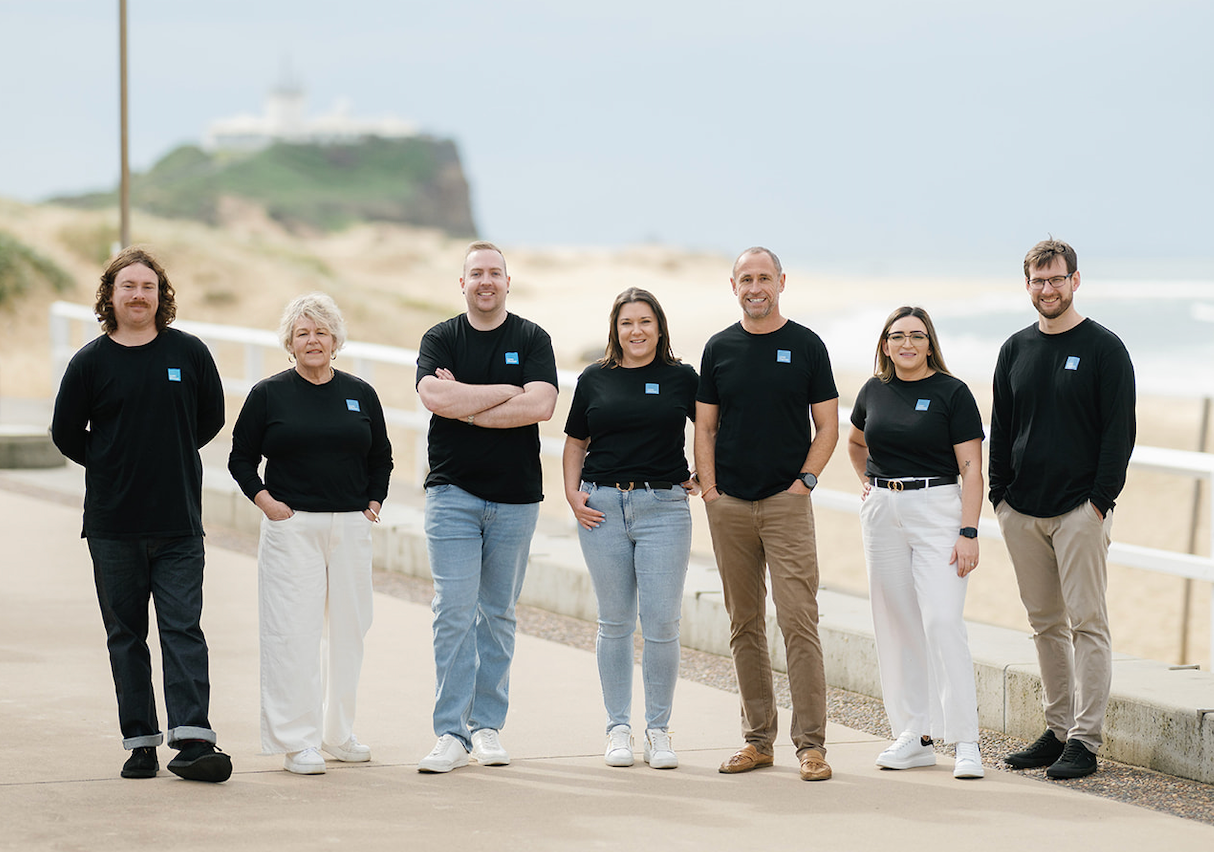
Our team at first home loan comparisons works through this with buyers across Newcastle every week, running the numbers across 60+ lenders to find where you actually stand - not where the bank's calculator says you should.
Key takeaways
- Lenders assess your borrowing capacity at roughly 3% above your actual rate.
- First home buyers can buy with a 5% deposit under the First Home Guarantee.
- The FHBG price cap for Newcastle is $1,500,000, covering most suburbs.
How much can a first home buyer borrow in Newcastle, NSW?
Most first home buyers in Newcastle can borrow somewhere between four and six times their gross annual income, though the actual number depends heavily on your expenses, your debts and what lenders find when they look at your bank statements. The APRA debt-to-income cap means no more than 20% of new lending may be written above a debt-to-income ratio of six times gross income, so very high borrowing relative to income is limited regardless of which lender you approach.
The buyers who come to us after using an online calculator are almost always surprised - sometimes in a good way, more often not. The calculator doesn't know your credit card limits, it doesn't shade your overtime, and it doesn't apply the lender's living-expense benchmark. Those three things alone can move your borrowing capacity by $80,000 to $120,000 in either direction.
Heath Williams · Director, Mortgage Brokers Newcastle · Chat to Heath →
How do lenders actually assess a first home buyer's borrowing capacity?
Lenders don't assess what you earn - they assess what you can demonstrably service under stress. Every application is run at an assessment rate roughly 3% above the actual loan rate, which is the APRA serviceability buffer. If you're applying for a loan with an actual rate of around 6%, the lender's calculator is testing whether your income covers the repayments at roughly 9%.
Income: what counts and what's discounted
Base salary from permanent employment is typically counted in full. Overtime, shift allowances and bonuses are treated more cautiously - most lenders accept somewhere between 80% and 100% of a consistent history, and they want to see six to twelve months of it before counting any. Casual income needs a similar track record, usually around twelve months in the same field.
Living expenses: the benchmark floor
Lenders use the Household Expenditure Measure as a floor for living costs. Even if you declare lower expenses, the lender substitutes the benchmark if your declared figure falls below it. This catches most first home buyers who under-estimate their outgoings - the benchmark is built from ABS survey data and is adjusted for household size and income. You can't negotiate below it.
Credit card limits and existing debts
Your credit card limit - not the balance, the limit - is assessed as though it's fully drawn. Most lenders treat it as a monthly commitment of roughly 3% to 3.8% of the total limit. A $10,000 credit card limit can reduce your borrowing capacity by $30,000 to $50,000, depending on the lender. HECS/HELP debt works the same way: the annual repayment is counted as an ongoing commitment, reducing the income available for a mortgage.
Source: APRA.
What does it cost to buy as a first home buyer in Newcastle, NSW?
Your deposit is the first number, but the upfront costs go further. Stamp duty, building and pest inspections, conveyancing and loan establishment fees all sit on top of what you're borrowing. In NSW, first home buyers are exempt from transfer duty on properties up to $800,000 and receive a concession on purchases up to $999,999. Above $1,000,000, full duty applies.
A 20% deposit avoids lender's mortgage insurance entirely. A 10% deposit brings LMI into play - roughly $14,000 on a $700,000 purchase or around $19,500 on a $900,000 one. A 5% deposit pushes LMI to approximately $21,000 on a $700,000 purchase. LMI protects the lender, not you, and it's usually added to the loan rather than paid upfront - which means you pay interest on it for the life of the loan.
CoreLogic data shows Newcastle suburb house medians ranging from $865,000 in Jesmond to over $1,100,000 in Hamilton and above $1,200,000 in parts of the inner suburbs. Entry-level units open the market wider - Jesmond's median unit sits at $660,000 and Waratah's at $743,000, both sitting well under the duty exemption threshold.
Source: CoreLogic (via YIP, mid-2026) and Revenue NSW.
| Get in touch Need help buying your first home? We're a local team who understand how lenders actually assess your situation, not just your rate. We'll compare your options across 60+ lenders to find the right fit.
|
What government schemes can first home buyers use in Newcastle?
Four pathways reduce the deposit or the cost of buying for first home buyers in Newcastle, NSW. Eligibility runs on the property price and your situation, not just your income.
The schemes worth knowing about:
- › First Home Guarantee: 5% deposit, no LMI, no income test. The Newcastle price cap is $1,500,000 - as a designated regional centre, Newcastle takes the capital-city cap, which covers almost every suburb on the approved list.
- › Family Home Guarantee: single parents and single legal guardians, 2% deposit, no LMI. You don't need to be a first home buyer. You must be genuinely single - separated but not divorced or de facto doesn't qualify. Newcastle cap is also $1,500,000.
- › Help to Buy: the federal shared-equity pathway, where the government co-owns up to 40% of a new home or 30% of an existing one. Income caps apply - $103,000 single, $165,000 joint - and the Newcastle price cap is $1,300,000. Launched December 2025, with 10,000 places for 2026-27.
- › First Home Owner Grant (NSW):$10,000 for eligible new homes only, up to $600,000 for a completed new home or $750,000 for house-and-land combined. Established homes don't qualify.
- › First Home Super Saver Scheme: lets you withdraw voluntary super contributions toward your deposit - up to $50,000 per person lifetime, $15,000 per year. Useful for buyers with time to build a deposit inside super.
NSW closed its state shared-equity scheme to new applicants on 30 June 2024. The pathway for shared equity in Newcastle is now the federal Help to Buy scheme above.
Source: Housing Australia and Revenue NSW.
When does borrowing more not make sense for a first home buyer?
Lenders will often approve more than is comfortable to repay. Borrowing at the top of your assessed capacity means your repayments are calculated at today's income, with no buffer for a rate rise, a reduced income period, or an unexpected cost. The assessment buffer is there for the lender's protection, not yours.
If you're stretching to the very top of what a lender will approve, it's worth sitting with what the repayments look like at 8% rather than the actual rate - that's closer to what you'd be managing if rates moved the way they have in recent years. For most first home buyers, buying slightly under capacity and keeping a cash reserve is the more durable position than buying at the ceiling and having no margin.
This matters most on units in Newcastle, where the entry price is lower but strata levies, sinking fund contributions and building insurance add ongoing costs the serviceability calculator doesn't fully model. Those are real commitments that sit alongside your mortgage every quarter.
Where a buyer is right at the ceiling of their borrowing capacity, we'd generally suggest targeting a property $50,000 to $80,000 below that ceiling rather than at it. The approval is cleaner, the application is stronger, and you're not one rate movement away from financial stress from day one.
Heath Williams · Director, Mortgage Brokers Newcastle · Chat to Heath →
How does a mortgage broker improve outcomes for first home buyers in Newcastle, NSW?
The lender choice decides more than most first home buyers expect - not just the rate, but whether you're approved at all and how much you can borrow. Three policy differences move the number in ways that aren't published side by side anywhere.
- › Overtime and variable income: some lenders count consistent overtime in full; others shade it to 80%. On a $20,000 annual overtime figure, that single policy difference shifts your borrowing capacity by $40,000 to $60,000 before anything else changes.
- › HECS treatment: all lenders count your annual HECS repayment as a commitment, but the way it's modelled differs. Some apply the ATO's published repayment rate directly; others run a more conservative calculation that reduces your capacity further.
- › Living-expense benchmarks: lenders don't all use the same HEM tier. The benchmark for a single borrower versus a couple, or for different postcode income bands, differs between lenders - and a lender whose benchmark aligns more closely to your actual spending will give you a higher approval.
Comparing across the panel finds the lender whose policies suit your income shape and your situation, not just the one with the most recognisable name.
What approval challenges do first home buyers face?
Where applications run into difficulty:
- › Credit card limits left open: a card you barely use still reduces your borrowing capacity if the limit is high. Reducing or closing the limit before applying directly increases the amount you can borrow.
- › Buy now pay later and ATO payment plans: both appear on bank statements and most lenders treat them as ongoing commitments. A pattern of BNPL use in three to six months of statements can complicate an otherwise clean application.
- › Applying to the wrong lender first: each application creates an enquiry on your credit file that stays for five years. A decline at one lender while you could have been approved at another costs you a credit enquiry and time. Pre-approval from the right lender, confirmed before any formal application, avoids this.
- › Scheme eligibility missed: the First Home Guarantee has no income test from October 2025, which means many buyers who previously thought they didn't qualify now do. Not checking this before applying at full LMI rates is a common and avoidable cost.
Frequently Asked Questions
How much deposit do first home buyers need in Newcastle, NSW?
First home buyers in Newcastle can buy with as little as 2% under the Family Home Guarantee or 5% under the First Home Guarantee. A 20% deposit avoids LMI entirely, which is the standard threshold for a standard loan without the scheme.
Does HECS debt stop first home buyers from borrowing in Newcastle?
HECS debt reduces borrowing capacity rather than stopping approval. The annual repayment is counted as an ongoing commitment, so a larger HECS balance means a lower borrowing limit - paying down a small remaining balance before applying can lift your capacity.
What is the First Home Guarantee price cap for Newcastle?
The cap is $1,500,000 for Newcastle, which is classified as a regional centre taking the capital-city rate. That covers almost all house and unit medians across the 27 approved Newcastle suburbs.
Should a first home buyer in Newcastle fix or stay variable?
For most first home buyers, a variable rate with an offset account gives more flexibility than fixing, especially where income may change in the first few years. Fixing is worth considering where your budget has very little room and rate certainty matters more than flexibility.
Can first home buyers use the NSW First Home Owner Grant on an established home?
No. The $10,000 NSW First Home Owner Grant applies only to new homes - newly built, off-the-plan or substantially renovated and never previously occupied. Established homes don't qualify, though the stamp duty exemption does apply to them up to $800,000.
Is a mortgage broker or a bank better for a first home buyer in Newcastle?
A mortgage broker, every time. A broker compares your capacity and eligibility across 60+ lenders simultaneously, including which lender's policies suit your income shape, and identifies scheme access you may not know you have - a single lender can only offer its own products.
Your Next Steps
Working out how much you can borrow as a first home buyer in Newcastle, NSW involves more moving parts than any online calculator captures - your income type, your existing debts, your living expenses and which lender's policies align with your situation all shape the final number. Getting that number right before you start making offers is what puts you in a position to act when the right property comes up.
Ready to find out which lenders will work best for your first home purchase? Contact the Mortgage Brokers Newcastle team or call (02) 4920 6468. We'll canvas our 60+ lender panel and find the most suitable options for your circumstances.
|
External Resources
Mortgage Brokers Newcastle, Hamilton and Newcastle, NSW. This is general information only - this article does not constitute financial advice. Please consider your own circumstances and seek professional advice before making any financial decisions.